First, check the board and pencil notes
A missing candidate can hide a pattern. An extra candidate can make a false one appear. The hint checks for both before suggesting a move.
If the notes are incomplete, you can fill them in one tap or close the hint and fix them yourself. A contradiction must be corrected before the coach can continue.
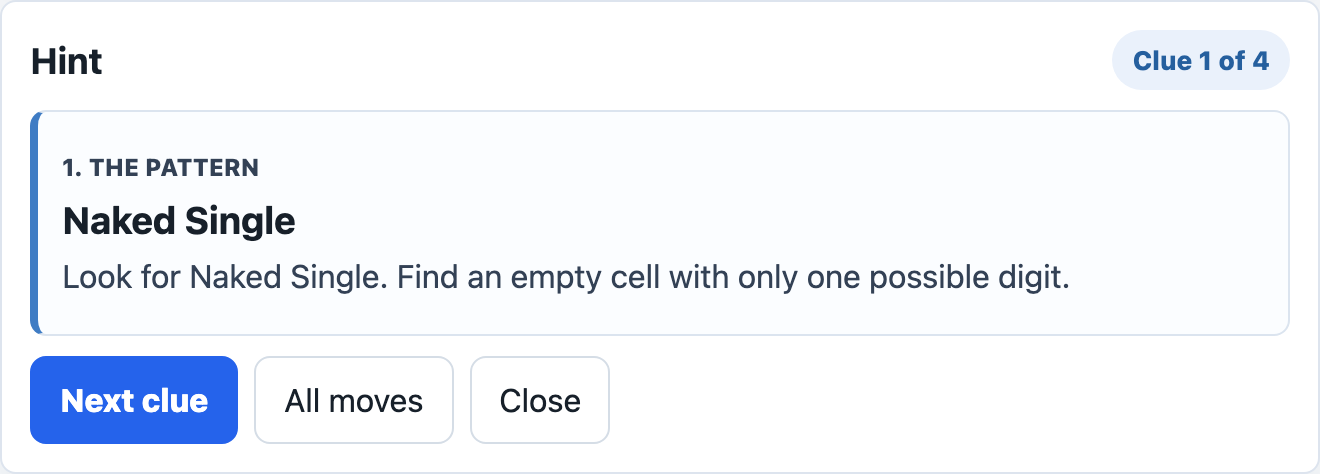
Next, reveal the technique name
A clue such as Hidden Single tells you where to focus without giving away the cell. Try the board again before moving forward.
A short definition appears under the name. This is handy when you remember the term but have forgotten the rule.
Then narrow the search
The second clue names a candidate to track. The third highlights the row, column, or block where the pattern appears.
Return to the board after either clue if you can finish the deduction yourself.
Finally, inspect the exact move
The full explanation identifies the cells, candidates, and row, column, or box used in the deduction.
The small board marks evidence in green and eliminations in red. Use Back and Forward to compare the clue with the proof.
Apply the move when it makes sense
Press Apply to copy the deduction to your puzzle. Close the hint if you want to make the move yourself.
I often close the explanation and find the cells again on the main board. That extra pass helps the pattern stick.
A simple way to practice with hints
- Study the board and decide which technique might work.
- Open Hint and reveal the technique name.
- Use the candidate and search-area clues only if you still need help.
- Look for the move again before opening the exact explanation.
- Check the marked evidence and return to the puzzle.
Repeat this on a few puzzles. The useful practice is finding the pattern before the final screen shows it.